
10 Interesting Facts About Coral Reefs
Coral reefs are some of the most remarkable places in the ocean. They look colourful, calm and almost dreamlike from the surface, but underneath that beauty is a busy living system built by tiny animals. These places support marine life, protect coastlines and help communities that rely on the sea for food, jobs and tourism. The main keyword, 10 interesting facts about coral reefs, fits this topic well because reefs are not just beautiful. They are full of science, survival and quiet genius.
Here are 10 interesting facts about coral reefs that show why coral is more than a pretty underwater backdrop.
1. Corals are animals, not plants
One of the most important facts about coral is that corals are animals. They are marine invertebrate animals related to jellyfish and sea anemones. The idea that corals are plants is a common mistake because many types sit still and some look like flowers or trees. But each coral animal has a simple body, a mouth and tentacles that help it feed.
A coral polyp is the tiny animal that forms the base of many coral colonies. Many individual polyps live together in a colony, and over time, that colony can become part of a much larger coral reef. So when you look at a coral reef, you are not looking at one creature. You are looking at a crowded neighbourhood of living animals. Tiny tenants, massive real estate.
2. A coral reef begins with very small polyps
A coral reef starts with small living units called polyps. A polyp can capture tiny food particles with its tentacles, while many hard coral types also receive energy from algae living inside their tissues. USGS explains that coral skeletons are formed when the polyp secretes calcium carbonate, creating hard structures that can support future growth.
This is why coral reefs grow slowly but powerfully. When older skeletons remain in place, new coral can settle and grow on top. Over many years, these layers help form reefs. Coral grow through patient repetition, not overnight drama. That is one of the fascinating facts people often miss. Reefs are not built by speed. They are built by consistency.
3. Coral and algae have a powerful partnership
Many reef-building corals live with microscopic algae called zooxanthellae. These algae are a type of algae that live inside the coral tissue. The relationship is symbiotic because the alga receives shelter, while the coral receives energy created through photosynthesis. In simple terms, the algae use sunlight to produce food, and that food helps the coral survive.
This symbiotic relationship is one reason shallow tropical coral reefs can thrive in clear ocean water where nutrients may be limited. Corals have a symbiotic relationship with algae that helps them grow, build reefs and maintain their colour. When this partnership breaks down, the results can be serious, especially during heat stress.
4. Coral reef ecosystems support huge amounts of marine life
Coral reef ecosystems are often described as some of the most diverse ecosystems in the world. The National Oceanic and Atmospheric Administration states that coral reefs cover only about 1 percent of the world’s oceans but provide habitat for at least 25 percent of the world’s marine life. They support fish, sponges, crabs, molluscs, turtle species and many other marine animals.
This means a coral reef is not just a collection of pretty shapes. It is an ecosystem where different species feed, hide, reproduce and compete. Coral reefs include hard surfaces, caves, ledges, sand patches and living coral colonies. Small fish use them for shelter. Larger predators patrol their edges. A turtle may rest nearby, while tiny animals hide between branches. Reef ecosystems are busy, layered and full of movement.
Many communities also rely on coral reefs for food and income. Reefs for food may sound like a simple phrase, but it points to something bigger. When coral populations decline, fish habitats can also suffer, and that affects people who depend on reef species for daily life.
5. Coral reefs protect coastlines
Healthy coral reefs do more than support marine life. They also act as natural barriers. The National Oceanic and Atmospheric Administration explains that coral reefs can reduce the impact of waves, storms and floods, which helps protect shorelines from erosion and damage.
This is one of the coral reef facts with real world importance. Reefs provide protection before waves reach the coastline. Coral reefs provide a buffer for beaches, homes, roads and tourism areas. When reef damage occurs, coastal communities may become more exposed to storms and erosion.
Coral provide structure underwater, but that structure also matters above water. It protects people, property and local economies. That is why protecting a coral reef system is not only about saving fish. It is also about protecting coastal life.
6. The Great Barrier Reef is a giant coral reef system
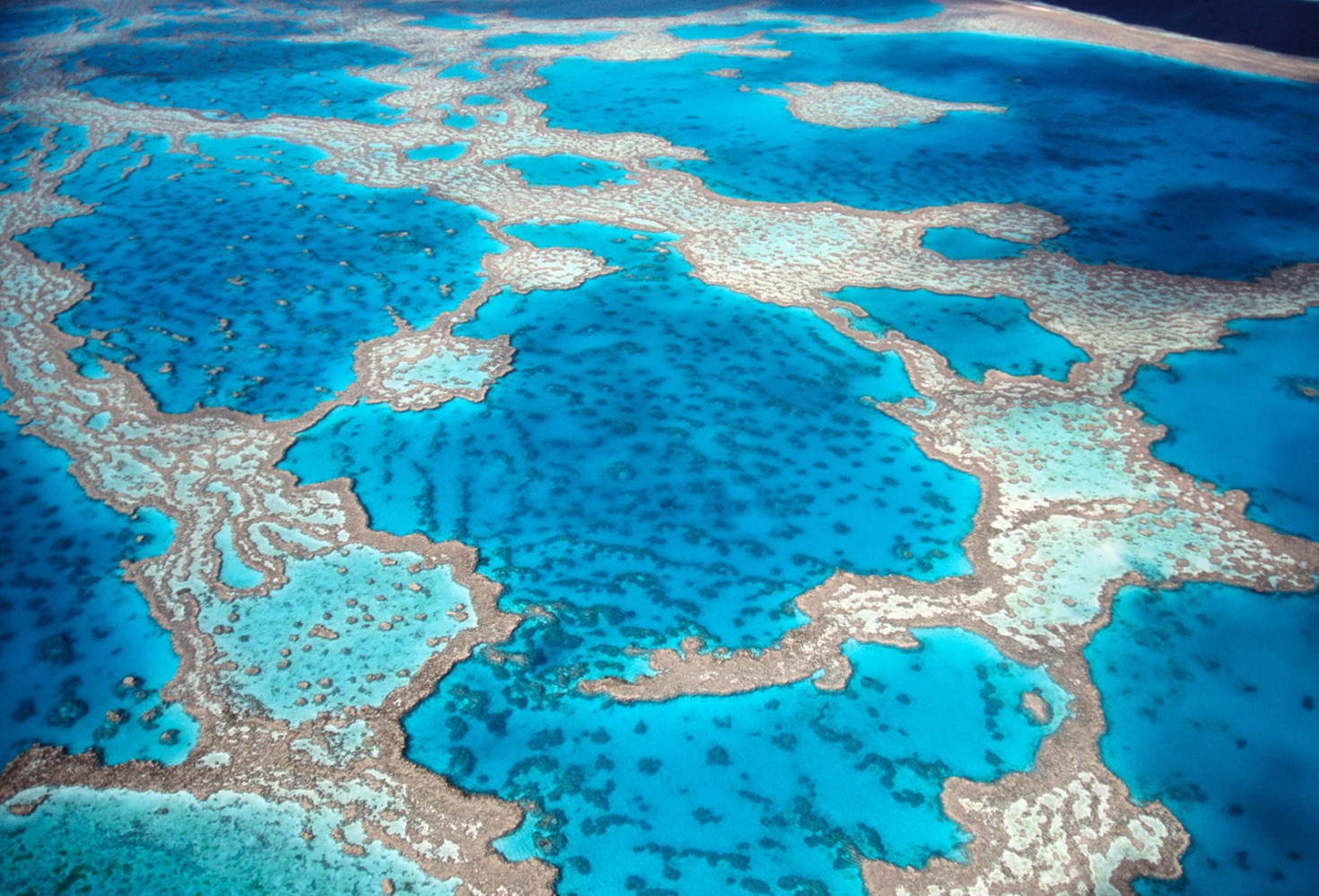
The Great Barrier Reef is the largest coral reef system in the world. The Great Barrier Reef in Australia covers about 344,400 square kilometres and includes around 3,000 coral reefs, 600 continental islands, 300 coral cays and about 150 inshore mangrove islands, according to the Reef Authority.
The Great Barrier Reef is not one continuous reef. It is a vast collection of barrier reefs, fringing reefs, islands and cays stretching along Queensland. These varied reef areas create some of the best places to snorkel the Great Barrier Reef, especially for visitors who want to see coral formations, clear water and rich marine life up close. Other famous reef systems include Ningaloo Reef in Western Australia, which is known for its close to shore coral formations and rich marine life.
People often say the Great Barrier Reef can be seen from outer space. A more accurate way to say this is that the reef is visible in satellite images because the light coloured calcium carbonate of the coral structure contrasts with surrounding ocean water. USGS notes that the reef appears bright blue in satellite images because of the white calcium carbonate coating and shallow water above it.
7. Coral reefs have ancient roots
One of the most surprising facts about coral is how far back their history goes. USGS states that corals have been found in fossil reefs as old as 500 million years ago, while corals similar to modern colonial varieties have built reefs over the last 60 million years.
That gives coral reefs a deep history. A modern reef may look delicate, but the wider story of coral stretches across ancient seas, shifting continents and changing climates. Coral can be found in many ocean settings, and different species of coral have adapted to different environments over time.
Reef-building corals create strong structures through their hard skeletons. Stony coral, also called hard coral, can help build reefs because it produces a limestone like skeleton. As coral reefs grow, old skeletons become the foundation for new coral. This is slow work, but over time it can form reefs large enough to shape islands, lagoons and coastlines.
8. Not all coral is hard, shallow or tropical
When most people picture coral, they imagine bright tropical coral in clear shallow water. That image is partly true, but it is not the whole story. ICRI explains that hard coral and soft coral are different groups. Hard coral includes many reef-building corals, while soft coral does not have the same rock like skeleton and often has a more flexible structure.
Soft coral can look like underwater feathers, fans or trees. Some species sway in the current and capture food from passing water. This adds movement and texture to reef ecosystems. It also shows why coral species should not be treated as all the same.
Deep sea corals are another reminder that coral is more varied than people think. Some corals live far below the surface, where sunlight does not reach. These deep sea corals do not rely on sunlight to produce food in the same way many shallow reef corals do. Instead, they capture food from the water. Coral can be found in warm shallow seas, deeper oceanic areas and places far beyond the classic postcard reef.
9. Coral bleaching is a stress response
Coral bleaching happens when coral become stressed and expel the algae living in their tissues. Because these algae help give coral colour and food, the coral may turn pale or white when the algae are lost. USGS describes bleaching as the process that occurs when stressed corals expel their algal symbionts.
A coral bleaching event does not always mean instant death, but it is a serious warning. If stressful conditions continue, the coral may not receive enough energy to survive. Rising ocean temperatures are a major cause of bleaching, and climate change increases the risk of repeated heat stress events.
The Reef Authority states that climate change is the greatest threat to the Great Barrier Reef, and that serious disturbances such as major coral bleaching events are expected to become more frequent in the future. AIMS also reported that mass bleaching occurred on the Great Barrier Reef in 2025, making it the sixth such event since 2016.
Climate change is the biggest long-term pressure, but it is not the only one. Pollution, poor water quality, destructive fishing, sediment runoff and physical damage are all major threats to coral. Carbon dioxide contributes to warming and ocean chemistry changes, which can make conditions harder for reef ecosystems. When coral reefs are hit by several threats at once, recovery becomes much harder.
10. People can help coral reefs
The world’s coral reefs face real pressure, but people can still help coral. The practical actions are not glamorous, but they matter. Responsible tourism, better water quality, careful boating, reduced pollution and strong climate action can all help the coral and the wider ecosystem.
Visitors can protect coral reefs by never standing on living coral, avoiding touching reef structures, keeping fins clear of the bottom and choosing responsible tour operators. Boaters can use moorings instead of dropping anchors onto reefs. Coastal communities can reduce runoff and improve waste management. Governments and industries can support stronger climate action, cleaner water and better reef protection.
To protect the coral reefs, people need both local care and global action. Local actions reduce direct stress. Climate action reduces the heat pressure that causes bleaching. The point is simple: reef care is not a single heroic gesture. It is a pattern of better decisions.
Final thoughts on these coral facts
These 10 interesting facts about coral reefs show that coral is both fragile and powerful. A single polyp is tiny, but millions of individual polyps can form reefs that protect coastlines, feed communities and support marine life across the ocean.
The most amazing coral lesson is that small things can build something enormous when they work together. Coral reefs grow slowly, but their impact is massive. They are homes, barriers, nurseries, food sources and cultural places. They are also warning systems for ocean health.
The best facts about coral reefs are not just fun trivia. They remind us that coral reef ecosystems are living systems worth understanding, respecting and protecting. If we want healthy coral reefs in the future, we need to protect coral reefs now.